
Creating 2D Rectangular Stacked Plots
A rectangular stacked plot is a 2D, x-y graph of results, with each trace displayed on a separate plot.
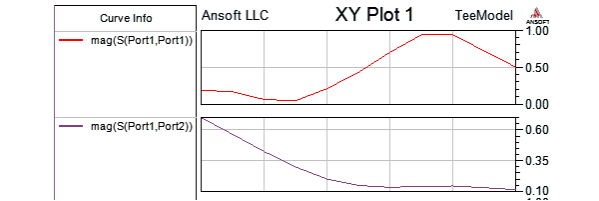
- On the Results
menu (under the
The Report dialog box appears.
- In the Context section make selections from the
following field or fields, depending on the design and solution type:
- Solution field with a drop down selection list. This lists the available solutions, whether sweeps or adaptive passes.
- Domain field with a drop-down selection
list. Whether this field appears, and the domains listed, depend on the
Solution type and the report <type> selected.
Before you can examine the time domain, you must perform an Interpolating sweep for a driven solution (Modal or Terminal). If you select Time, the TDR Options button is enabled. Select it and follow the directions for time-domain plotting.
- Geometry field with a drop down selection list. For field and radiated field reports, this applies the quantity to a geometry or radiated field setup.
- Under the Trace tab, Y component section, specify the information
to plot along the y-axis:
- In the Category list, click the type of information to plot. The category you select provides the default plot name.
- In the Quantity list, click the value to plot.
- In the Function list, click the mathematical function of the quantity to plot.
- Value field displays the currently specified
Quantity and Function. You can edit this field directly.
Note:
Color shows valid expression.
- Range Function button -- opens the Set Range Function dialog box. This applies currently specified Quantity and Function.
- On the Trace tab, X (Primary sweep) line, specify the quantity
to plot along the x-axis in one of the following ways:
- Select the sweep variable to use from the drop down list.
- If sweeps are available, you can select the browse button to display a dialog that lets you select particular sweep or sweeps, or all sweeps. The quantity will be plotted against the primary sweep variable listed.
- On the Families tab, confirm or modify the sweep variables that will be plotted.
- Click New Report.
This creates a new report in Project tree, displays the report with the defined trace, and enables Add Trace on the Report dialog box. The default name is based on the Report Category you selected, (for example, S Parameter Plot n or rE Plot n). You can edit the plot names in the project tree and the plot header text in the report synchronizes.
The function of the selected quantity will be plotted against the swept variable values or quantities you specified on an x-y graph. The plot is listed under Results in the project tree and the traces are listed under the plot. When you select the traces or plots, their properties are displayed in the Properties window. These properties can be edited directly to modify the plot.
- Optionally, add another trace to the plot by following the procedure above, using Add Trace rather than New Report.
You can also modify the display type of an existing plot from the Properties dialog for that plot. Select the Report icon in the Project tree to display the Properties dialog box. Selecting the Display Type field displays a menu with selections available for that plot.

Once you make a selection, the plot display updates for the current selection.