


SYNC-Therm
Module of Motor-CAD for the thermal design of Synchronous Machines (SYNC).
Synchronous Machine Selection:
The Synchronous Machine is selected using the Motor Type selector.
Synchronous Machine Cross Section:
The synchronous machine rotor types are selected using the Rotor Type.
The radial cross-section is shown below:
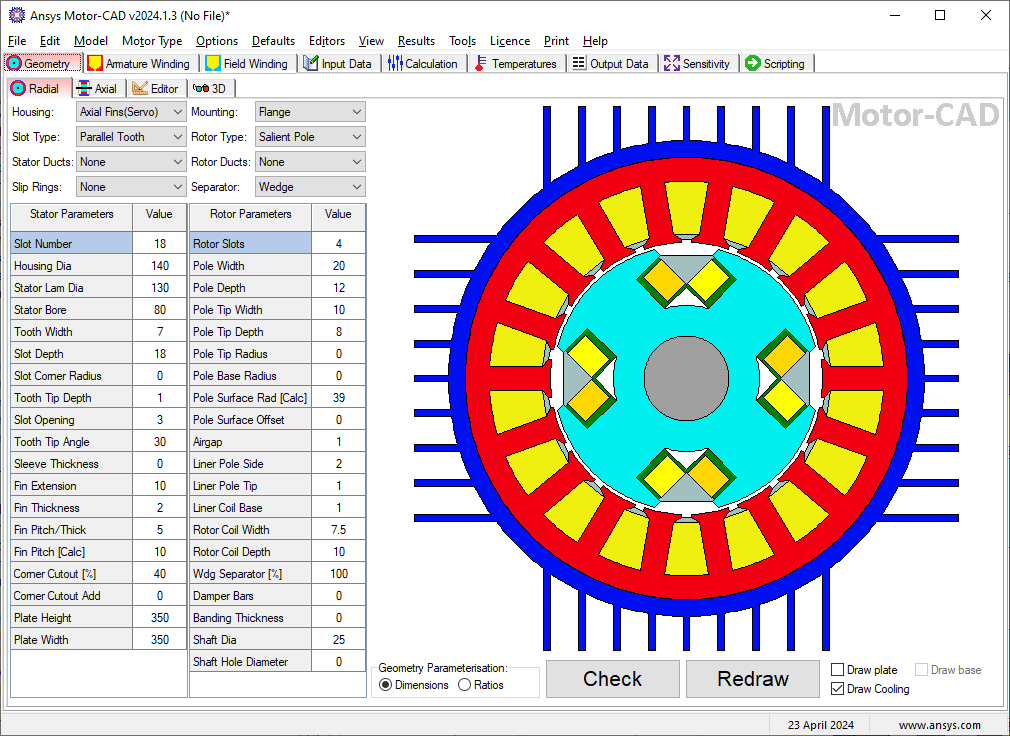
Figure 1: Synchronous Machine radial cross-section
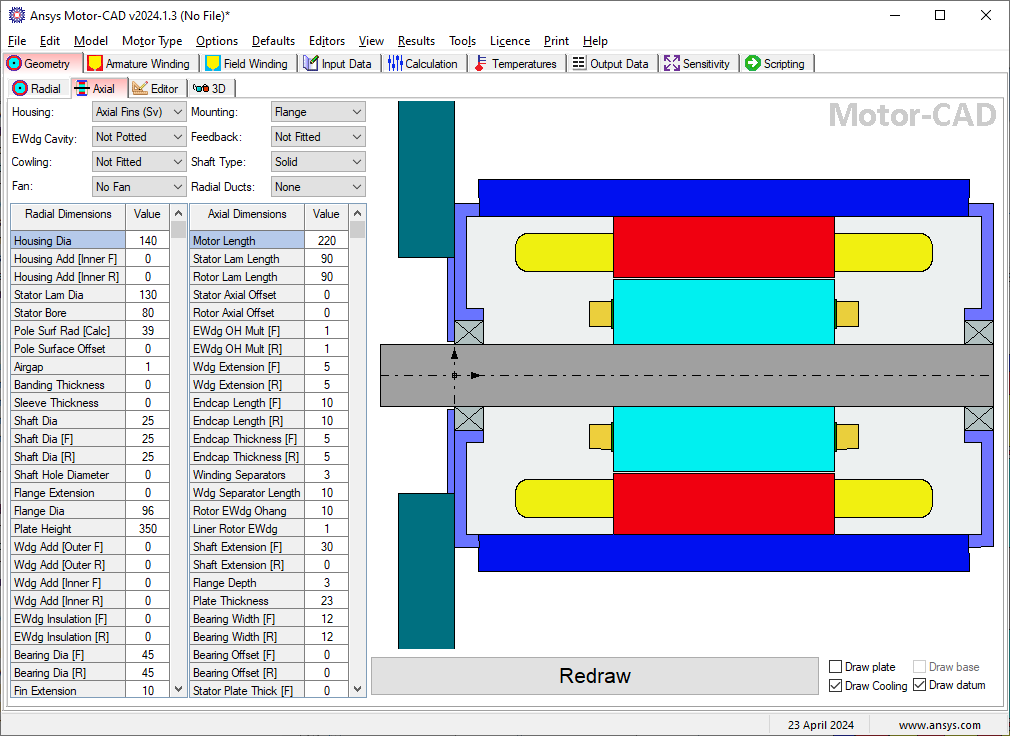
The axial cross section is shown below:
The endwinding dimensions are set in Axial Cross-Section Editor. See rotor endwinding geometry for details.
Synchronous Machine Winding:
Stator Winding
The stator winding model used in Motor-CAD is the same as in the brushless permanent magnet (BPM) and induction motors (IM). This can have parallel teeth or parallel slots. This model is also used for form wound windings, the user selecting an appropriate wire size that matched the rectangular conductors used. In the future new parameters may be added to give a better model for the form winding. The winding is defined in the Stator Winding Editor.
Field Winding
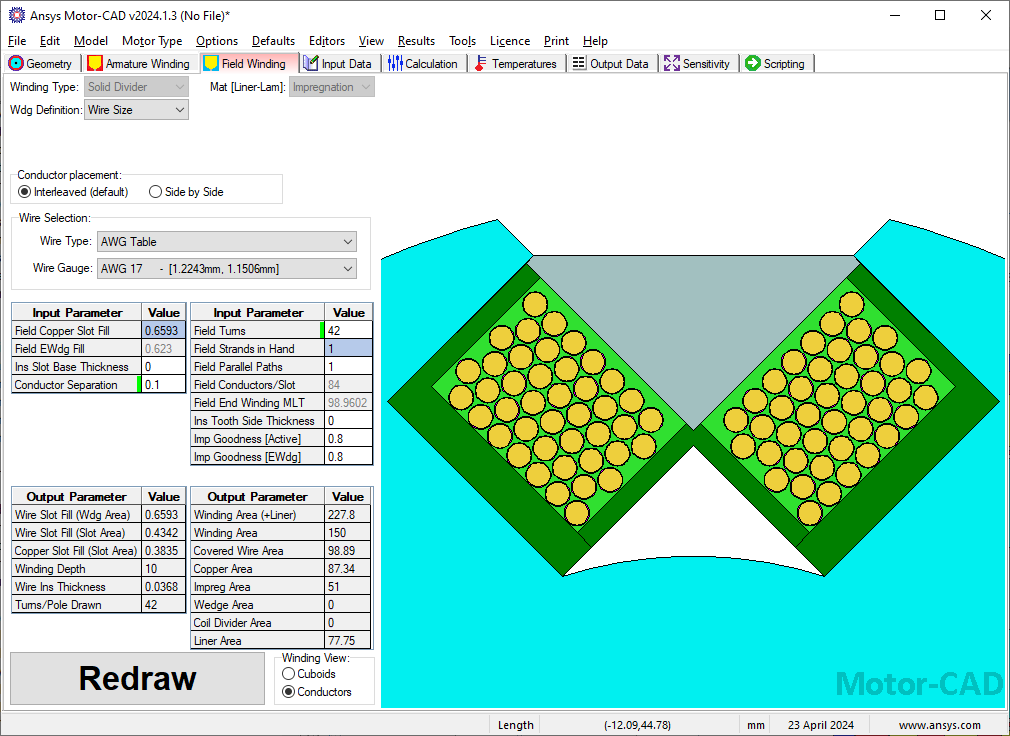
The rotor has a bobbin wound coil. The thickness of insulation between the winding and the rotor pole base and sides are set independently using the radial and axial cross section editors.
The field winding is defined in the field winding editor shown below :
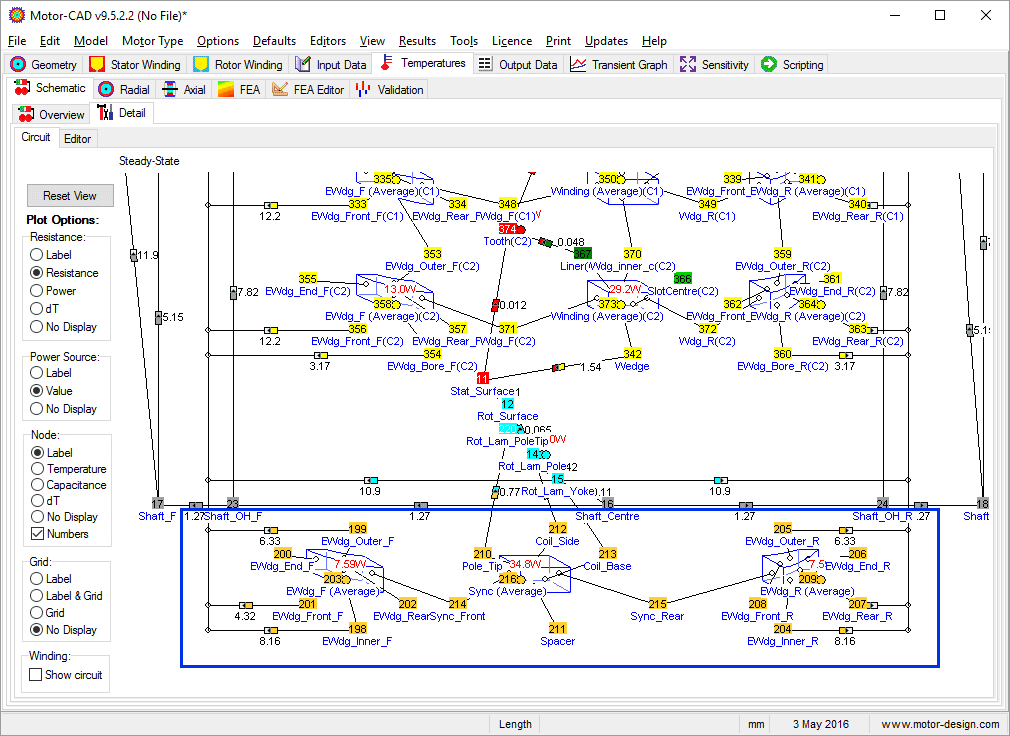
The resistance/power source network that is used to model the rotor winding and rotor poles is shown below.
The rotor coil is modelled using the cuboidal model with cuboids used for the active section and single cuboids used for the front and rear endwindings.
Losses are distributed within the cuboids based on the winding lengths. These losses are transferred to the pole iron and interpole air via the coil sides, base and top.
The temperature schematic detail view shown below shows the thermal circuit modelled:
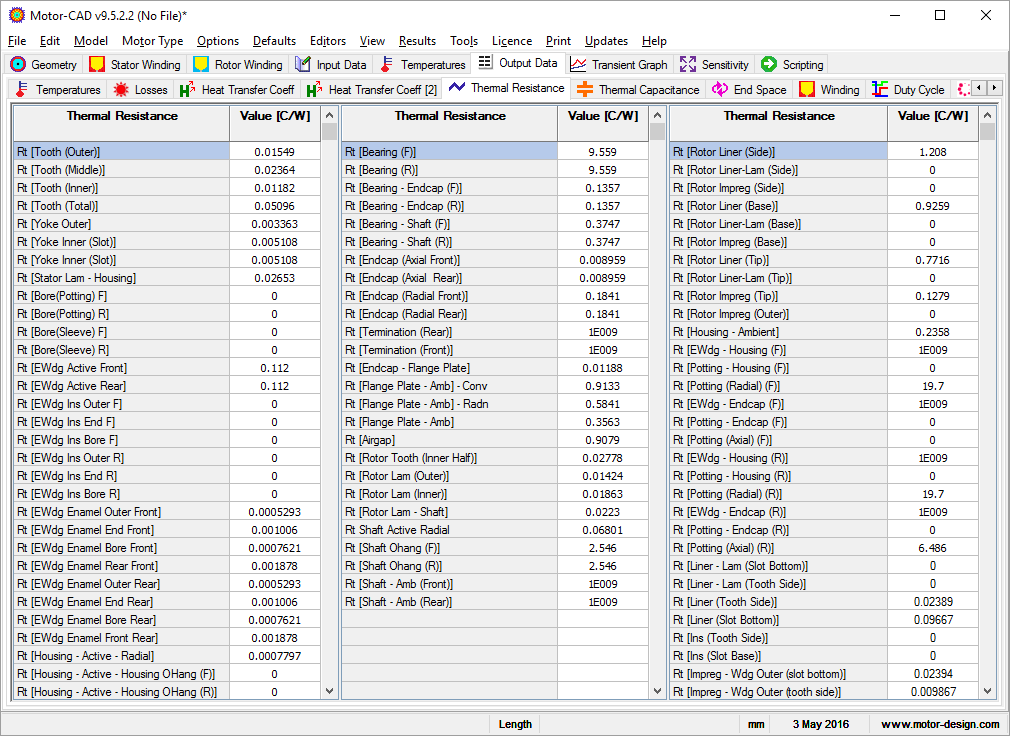
The thermal network resistances are displayed in the [Output Data] as shown below:
Results:
The calculated steady-state temperatures, resistances and power flow can be viewed in the Schematic or Output Data [Numerical Values]. The transient performance can also be calculated and viewed.