To ensure compatibility with the Envyo application’s mapping process:
Set POSTV = 63 to activate the required number of history variables.
Output a *.dynain file using:
*INTERFACE_SPRINGBACK_LSDYNA
$#     psid     nshv     ftype     -     ftensr     nthhsv     rflag     intstm
        1        31        0       0        0         0          0          0
PSID: Part-set ID for dynain output.
NSHV: Number of history variables to write to
*INITIAL_STRESS_SHELL.Set MAXINT = 3 in
*DATABASE_EXTENT_BINARYto match the number of integration points per layer.
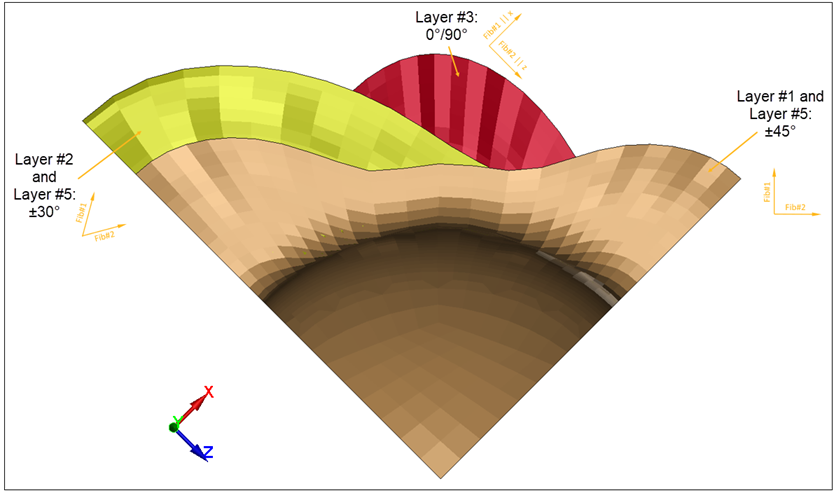
Since each shell part can move independently during the procedure, there are multiple outlines associated with the deformed geometry in Figure 4.16: Shear Deformation Of Fibers Stored in History Variable 32 and Figure 4.17: Draping Result of Initial Fiber Orientations for the Five Layers Prior to Analysis. In addition, some layers share identical fiber orientations, so their outlines overlap. As a result, only three distinct outlines are visible in the figure even though five parts are present. This approach ensures realistic layer interaction during draping while preserving individual layer properties for accurate mapping.
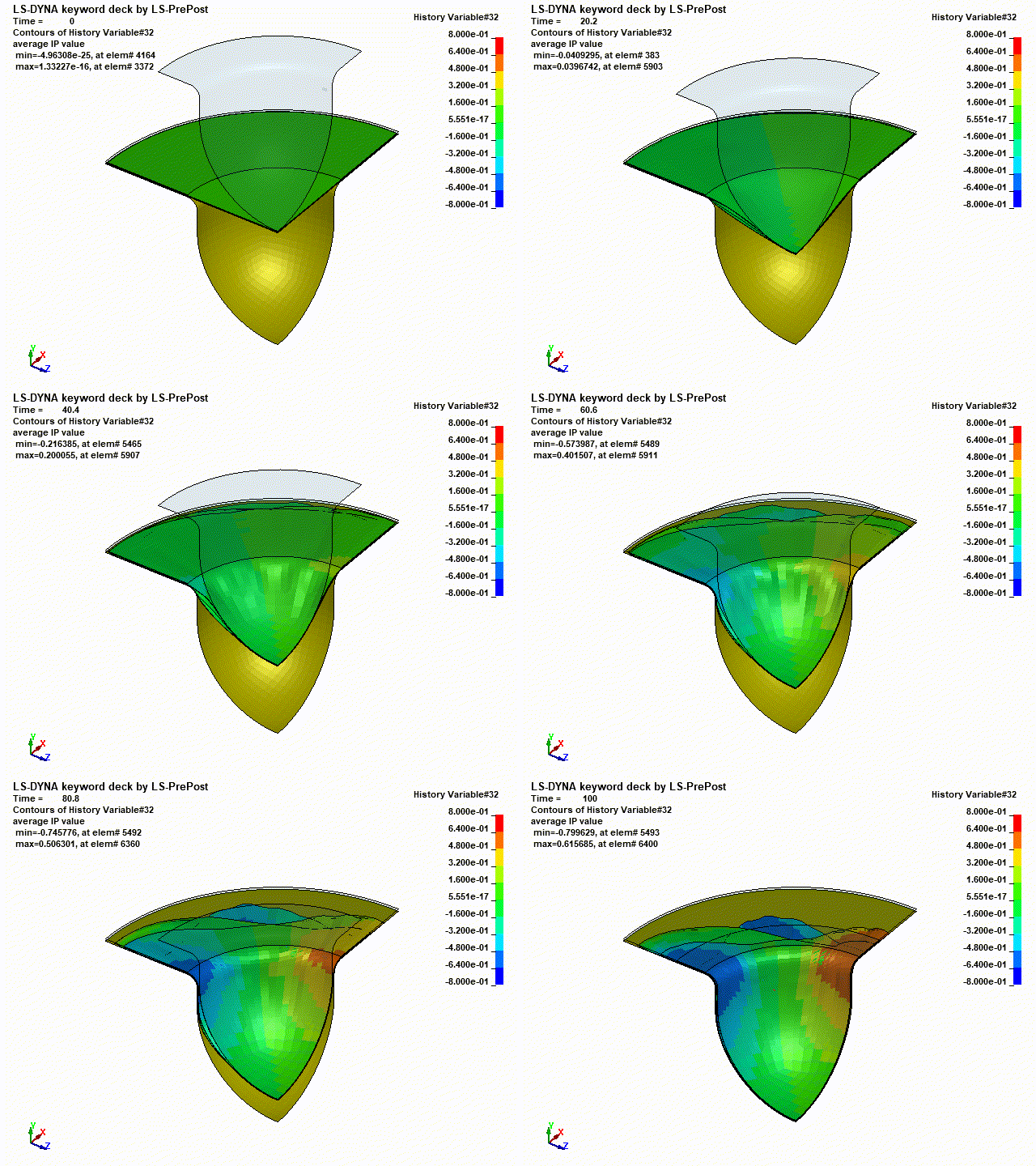
The following figure shows the final draping result with a reasonable shape of the different blanks, along with the initial configuration of the fiber orientation displayed.