Importing a Layout Component (General Mode Only)
Follow these steps to import a layout component into the active design.
- From the Draw menu, select Import > Layout Component to open an explorer window.
-
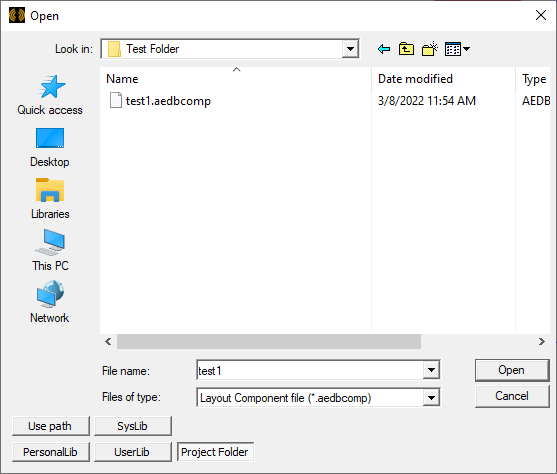
Navigate to a folder that contains the appropriate Layout Component file (*.aedbcomp file). Then click Open to close the explorer window and return to the Layout Editor.
-
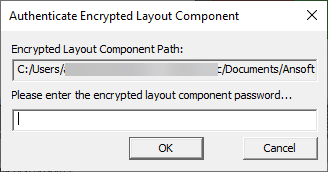
If the layout component is encrypted, an Authenticate Encrypted Layout Component window appears. Enter the layout component's encryption password, then click OK to proceed.
-
The imported layout component is attached to the mouse cursor as a stencil. Click+drag the stencil to move the layout component. Individual members of the layout component cannot be moved individually. Once a layout component is created, the positions of its members are frozen in relation to one another. If the layout component is unencrypted or partially encrypted, the stencil is an accurate representation of the layout component's geometry.
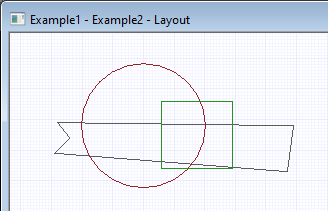
If the layout component is fully encrypted, the outline is a rectangle with no visible perimeters. Drag the stencil into position in the Layout Editor and left-click to place.
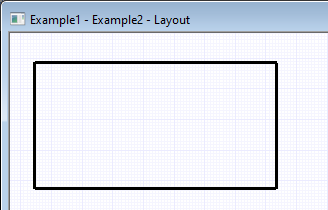
The imported layout component is now part of the active design. A definition for it is created in the Project Manager window > Project Tree > Definitions > Components folder.
Visible Restrictions of an Encrypted Layout Component
An encrypted layout component has other obvious restrictions that users will notice at a glance, such as in the following examples.
Layout Editor
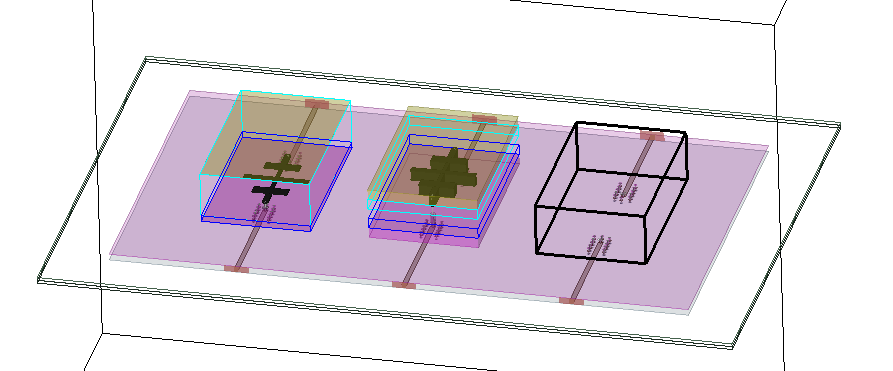
Navigate to the Layout Editor. Layout Component stencils in the Layout Editor will differ greatly, depending on their level of encryption. Referring to the following example:
-
Unencrypted Layout Component — (left-most) represents the design accurately, displaying every member of the layout component according to its material type, position, and dimensions.
-
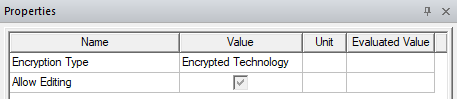
Encrypted Technology Layout Component — (middle) normalizes the dimensions of the layers and member parts of the layout component, making the visual representation noticeably more symmetrical and less accurate.
-
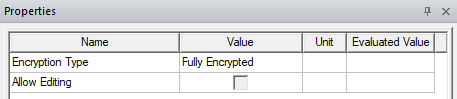
Fully Encrypted Layout Component — (right-most) appears as a black box outline.
Layout Editor - Mesh View
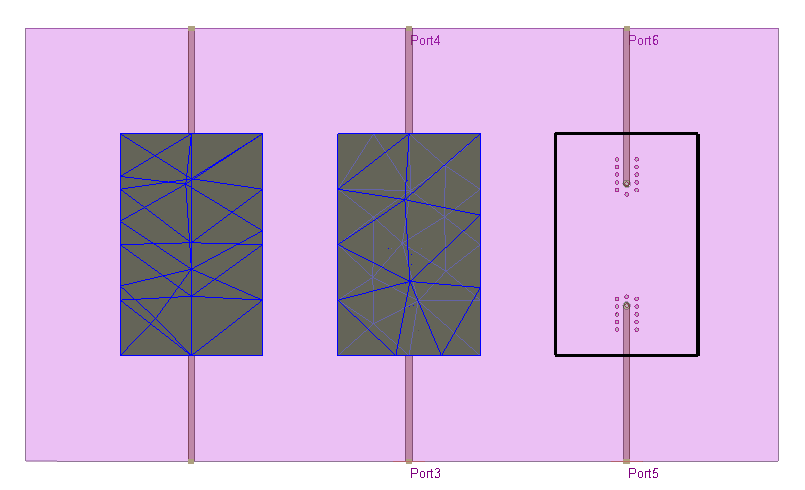
Layout Component plotted meshes will differ greatly depending on their level of encryption. Referring to the following example:
-
Unencrypted Layout Component — (left-most) represents the design accurately with a mesh as dense and complicated as the layout component requires depending on its materials, position, and dimensions
-
Encrypted Technology Layout Component — (middle) normalizes the dimensions of the layout component and its member parts. Subsequently, the mesh is noticeably more symmetrical and less accurate
-
Fully Encrypted Layout Component — (right-most) can not be assigned a mesh and will remain a black outline, or stencil. The only guidance the visual representation of a fully encrypted mesh gives users the accurate location of its ports.

Components Window
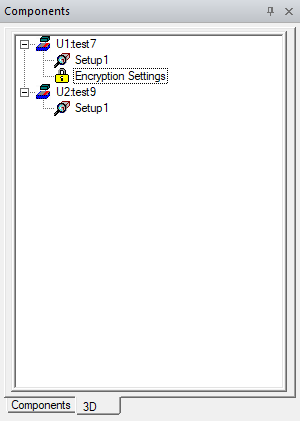
Refer to the Components window. A layout component that is not encrypted will list Setup mesh settings in an expandable dropdown menu. An encrypted layout component will have mesh settings and an Encryption Settings yellow lock icon.
Properties Window
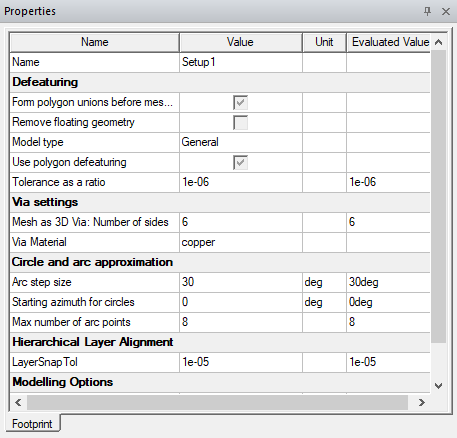
Select a Setup to view the layout component's accompanying mesh settings in the Properties window.
Select the yellow lock icon to view the layout component's encryption settings in the Properties window.
Edit Layers Window and Layers Pane
Navigate to the Edit Layers window. The layer Names have been obfuscated, and the physical parameters of the layers (e.g., material, dimensions, et cetera) have either been hidden or normalized.
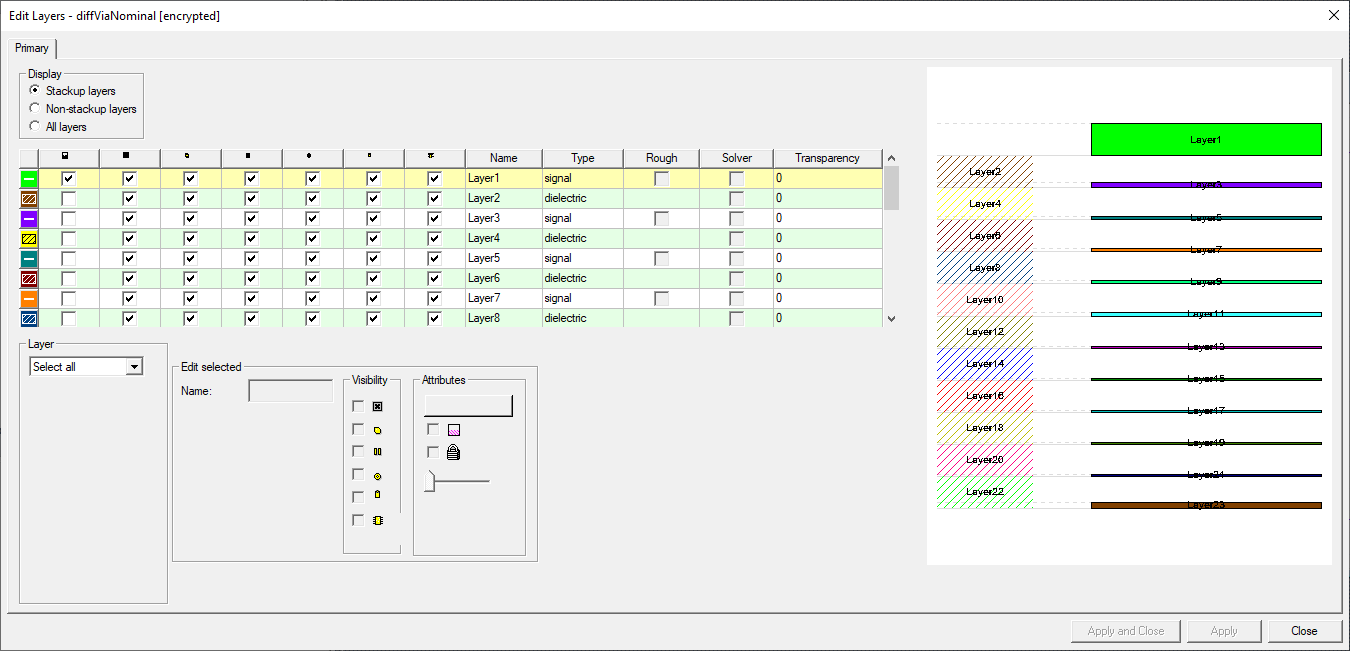
The names of the layers have also been obfuscated on the Layers pane.
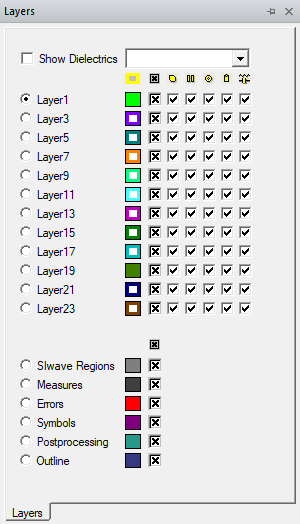
Hiding Layers and Nets
Encryption may make it difficult to view complex layout components in the Layout Editor, but nets and layers can be temporarily hidden to make it easier for users to view layout component members.
To Hide a Layer
From the Layers pane, remove the check on the box in the selected layer.
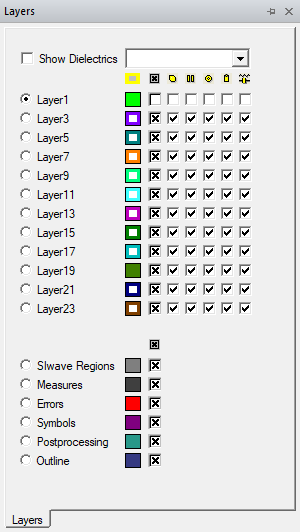
To Hide a Net
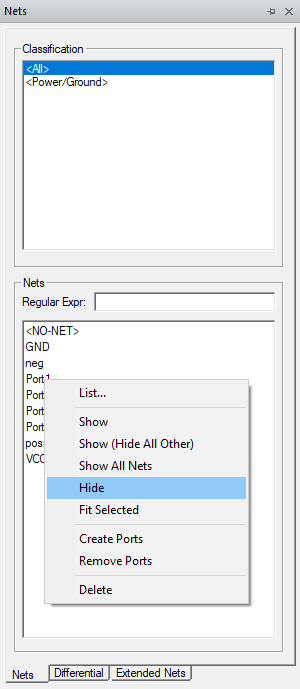
From the Nets pane, right-click a net and select Hide.