Network Data Explorer Overview
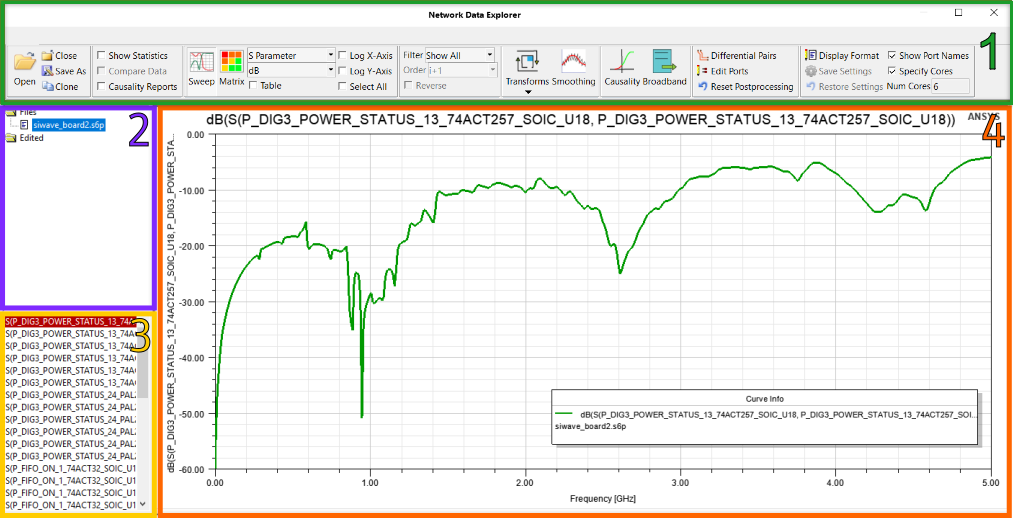
The Network Data Explorer window is divided into the following panes:
- Network Data Explorer Ribbon – allows you to perform Network Data Explorer's functions.
- Data Selection Pane – allows you to select a network data file.
- Cell and Frequency Selection Pane – allows you to narrow your selection.
- Data View Pane – displays data in table or plot format.
The panes are shown in the following figure. Additional information about each pane follows.
Network Data Explorer Ribbon
From the ribbon, you can control:
- Plotting – determine how the data is displayed. Click the Sweep or Matrix icon to select a plot type.
- Quantity – select the type of quantity to display (parameter values, matrix statistics, or causality plots).
- Parameter Type – choose parameters for display (S, Y, or Z parameters, Port Impedance, or Gamma).
- Format – decide the display function to apply to the data (e.g., magnitude, phase, dB, real, or imaginary).
- Export – export either SYZ data (*.s1p, *.ts, *.nmf, *.tab, *.m, *.cit) or Broadband data (*.sp).
- Causality Checking – check causality.
- Cores – enable or disable multithreading.
- Post-Processing – choose between terminal data and differential pairs, if your design includes differential pairs.
See: Network Data Explorer Ribbon.
Data Selection Pane
This pane allows you to view and compare various data sets. Original data sets appear under Files. Click one of these to see the dataset as it was when it was opened. Altered data sets (data sets that have been smoothed, transformed, or changed in some way) are listed under Edited.
Cell and Frequency Selection Pane
This pane allows you to choose to choose which cells or frequencies to display.
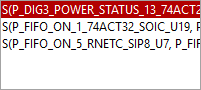
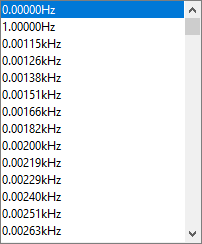
To select all frequencies or cell entries, use the Select All check box on the ribbon.
This pane can also list available variations. Selecting a variation activates it and affects table, plot, and statistics displays. When displayed by frequency, the entire matrix is presented in the Data View pane for each selected frequency. When displayed by matrix cell, the data for the individually chosen cells is shown across all frequencies. Use the Select All check box to select all variations.
Given the volume of data in many network data sets, choosing Select All may take a considerable time to generate, especially in Plot view.
Data View Pane
The Data View Pane displays either table or plot data, depending on your selections.