


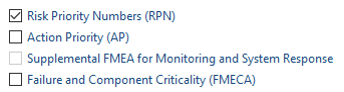
| FMEA Support for VDA-AIAG | The FMEA provides now natively the Action Priority (AP) risk evaluation method as defined in the VDA-AIAG standard. Both the DFMEA as well as the Supplementary Monitoring and System Response (MSR) FMEA are supported. Both options can be enabled as usual at the FMEA cover sheet and are fully supported including risk matrices. There is now a combined VDA-AIAG preset for convenience.
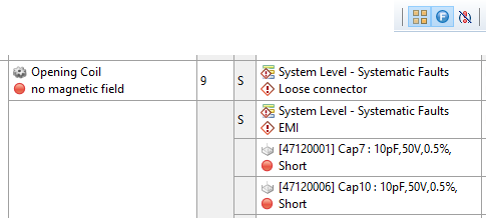
For this purpose, a new option to show the parent (context) information is available in the FMEA worksheet. Similar controls as in the Cause/Effect net viewer have been added to customize the new option.
|
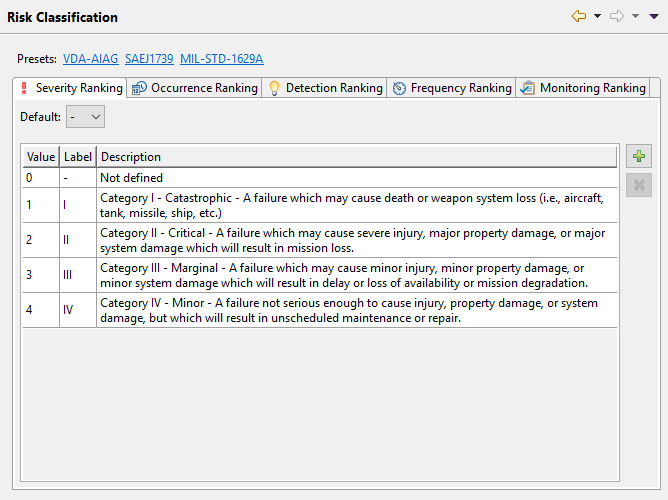
| FMEA Risk Graph Customization | Several FMEA standards make use of other risk levels than the classical RPN in the range of 1 to 10. In 2020 R2, Severity, Occurrence, and Detection rankings can be tailored in range and label appearance, e.g. to support MIL-STD-1629A (i.e. labels I, II, III, IV for severity) or similar. For common standards, the tool support presets to get the ranges right.
|
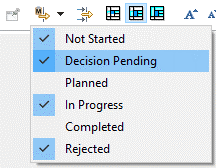
| Design Control status filter | To assess the design controls/measures in an FMEA there is now a filter for status of FMEA measures. This filter allows you to show/hide e.g. completed or rejected measures easily.
|
| Extended mission profile applications | The mission profile support for failure rate calculation has been extended to support now also all other handbooks in medini such as IEC 61709, MIL-STD-217F or GJB 299C. At the same time, we have enriched the possibilities to manage multiple power states with the internal working cycles to model complex power dissipations. |
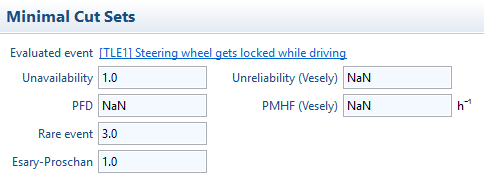
| FTA Evaluation | The quantitative evaluations have been extended by the Esary-Proschan upper bound and rare event approximations.
|
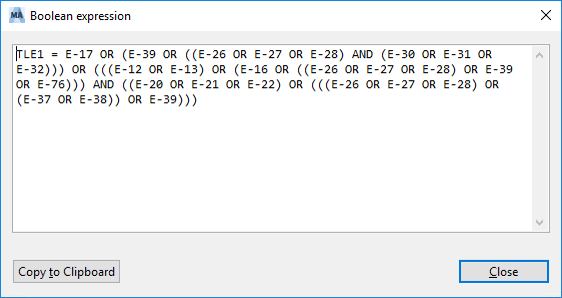
| FTA Extensions | Fault Trees can be transformed into textual Boolean expressions as required by some Aerospace standards for validation of the structure. The expression export can be triggered at any top, intermediate or base event node in a tree or diagram.
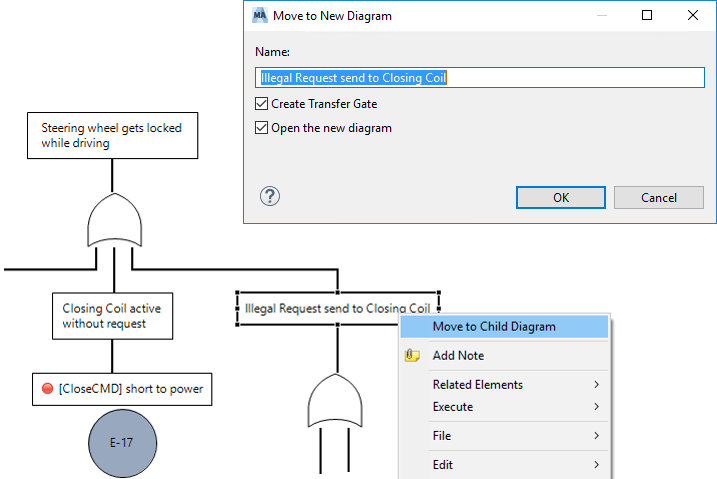
Moreover, a quick way to split fault trees to new diagrams has been added as a tool to refactor large trees, grown over time for example.
The FTA performance for probability and cut set calculations have been improved significantly as well as the memory footprint. |
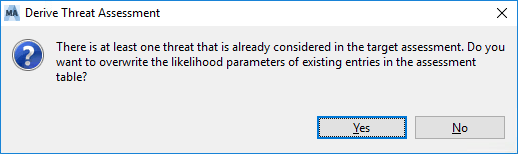
| TARA Likelihood Propagation | The new release supports a convenient propagation of likelihood parameters from threats to TARA by using the "Derive" feature or more quickly using drag & drop. Likelihood parameters that have been changed in the Threat collection are propagated to the assessment. In addition, individual Threats can be dropped selectively to the open TARA editor to assess them.
|