


Plug-In Toolkit
The Plug-In Toolkit provides several ways to customize the functionality of ModelCenter. Plug-ins provide a robust way to tie into the underlying services provided by ModelCenter using programming languages such as C++, C#, or Java.
Note: C++ is being removed as an available programming language for plug-ins and may not be compatible with future releases of ModelCenter. Users should be cautious when using it.
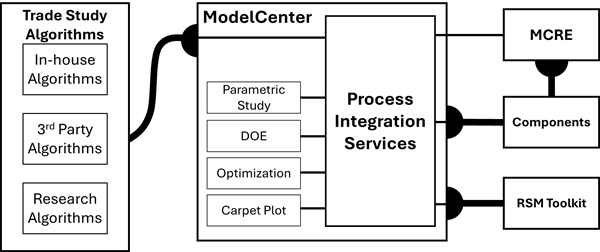
ModelCenter may be extended using 3 types of plug-ins:
| Plug-In Type | Description |
|---|---|
| Trade Study | Trade Study Plug-Ins allow custom optimization, robust design, and other algorithms to be tightly integrated with ModelCenter. Example tools include DAKOTA, NPSOL, and SNOPT. |
| Component | Component Plug-Ins allows ModelCenter to tightly wrap other
applications as Components. This direct interface between ModelCenter and the
external application permits advanced features such as:
|
| Data Collector | Data Collector Plug-Ins permit post processing to data stored
in the Data Collector. The RSM Toolkit is implemented as a Java Plug-In for
creating Response Surface Models from ModelCenter data. Note: Data Collector Plug-Ins are being removed and may not be compatible with future releases of ModelCenter. Users should be cautious when using them in models. |