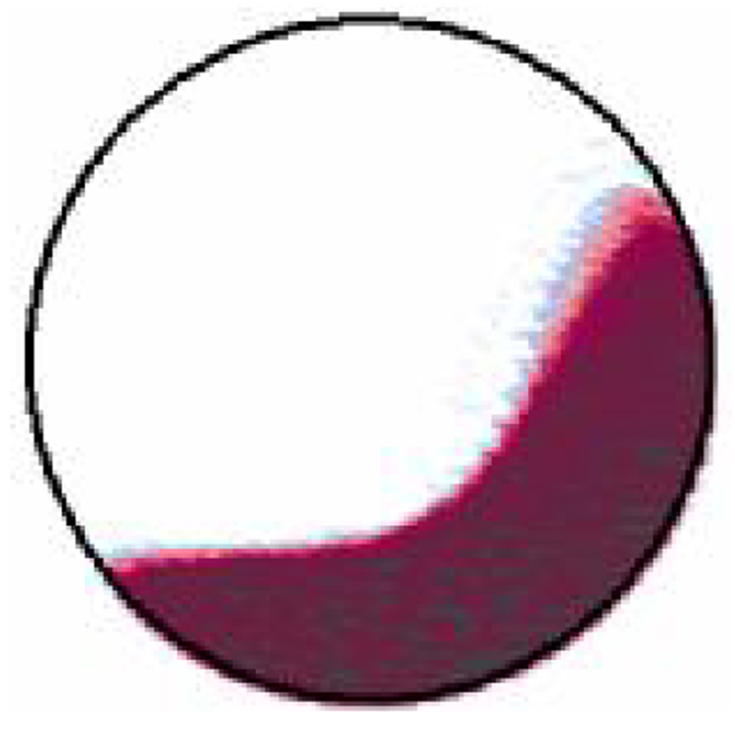
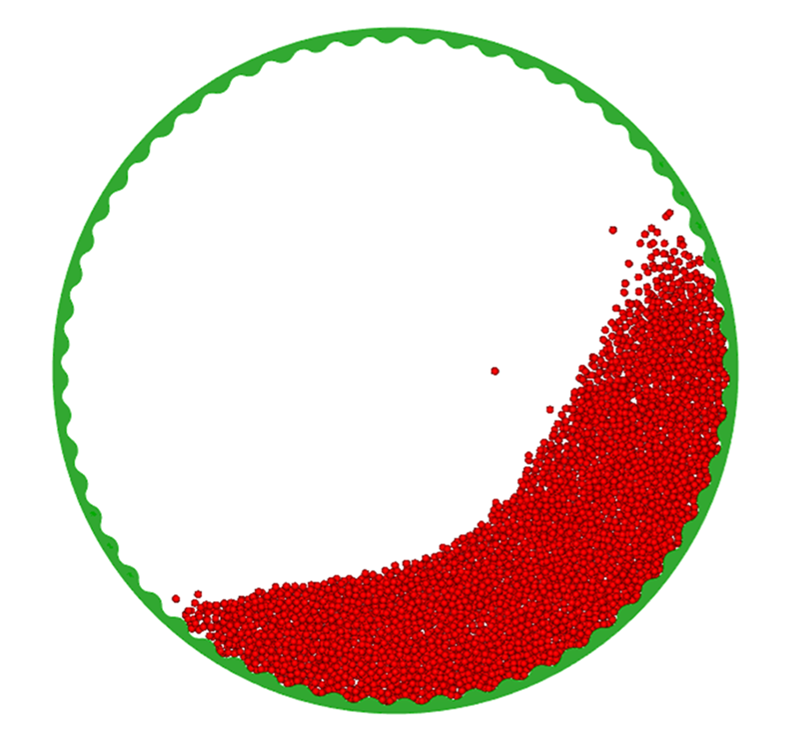
In this validation study, it is shown that the combination of the Discrete Element Method (DEM) with Archard's wear law is effective for simulating wear in mill cases. The wear rate in the DEM model is significantly higher than the experimental rate, and the entire wear process was simulated within a few mill revolutions. Based on the Lethabo mill described by Kalala (2008)[8], this validation case highlights the accuracy of mill wear simulation using the DEM method.
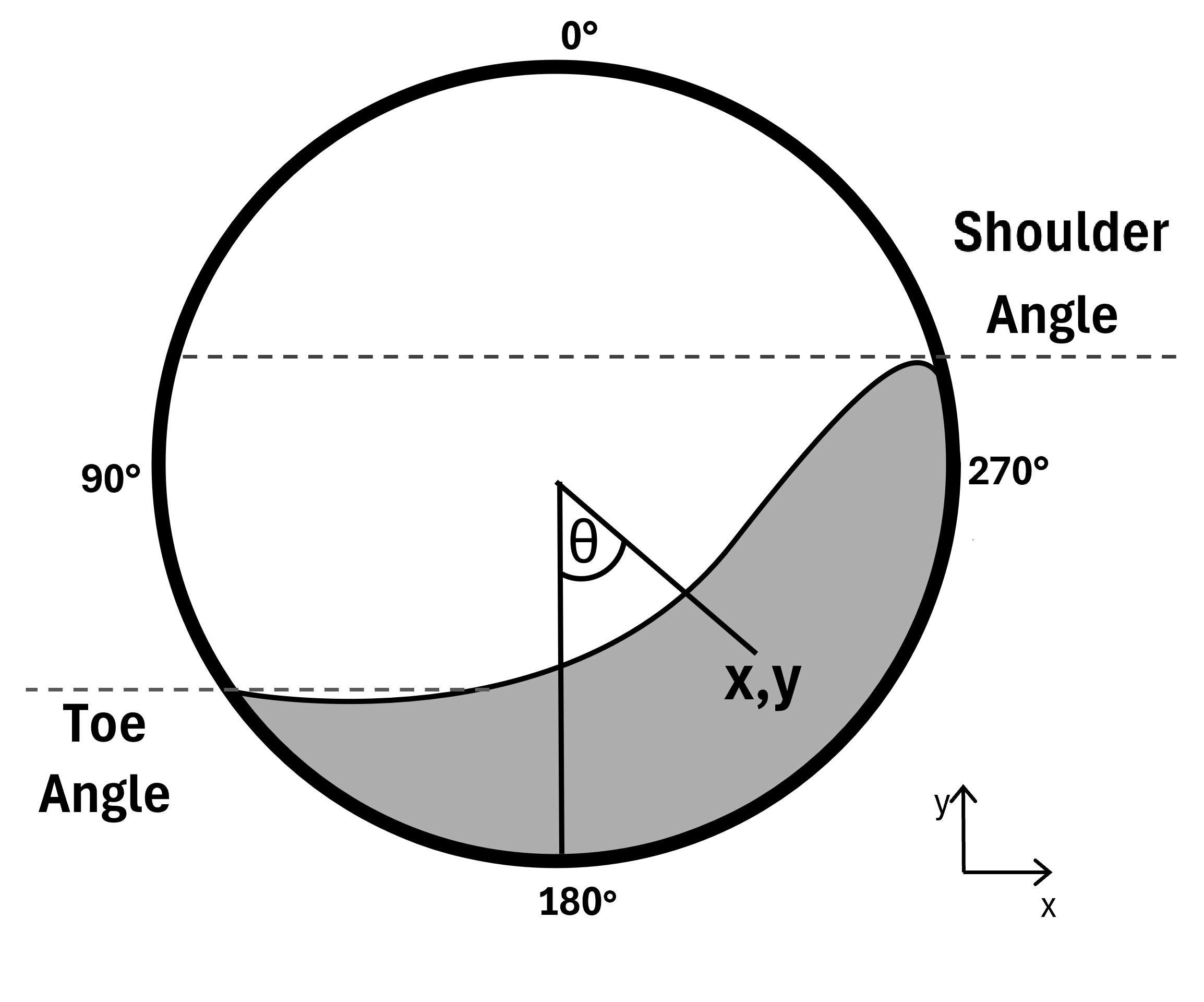
The Shoulder, Toe and  angles (Figure 2.10: Schematic View of the Load Angles ) were compared between the
simulation described by Kalala (2008)[8] and the
simulation performed in Rocky DEM and show good agreement ( Table 2.6: Comparison of Load Angles between Kalala (2008) and Rocky Simulation).
angles (Figure 2.10: Schematic View of the Load Angles ) were compared between the
simulation described by Kalala (2008)[8] and the
simulation performed in Rocky DEM and show good agreement ( Table 2.6: Comparison of Load Angles between Kalala (2008) and Rocky Simulation).